Google reports an AI response from a TPU in orbit. Learn how Project Suncatcher works, what remains experimental and why the satellite plan matters.
The latest verified milestone
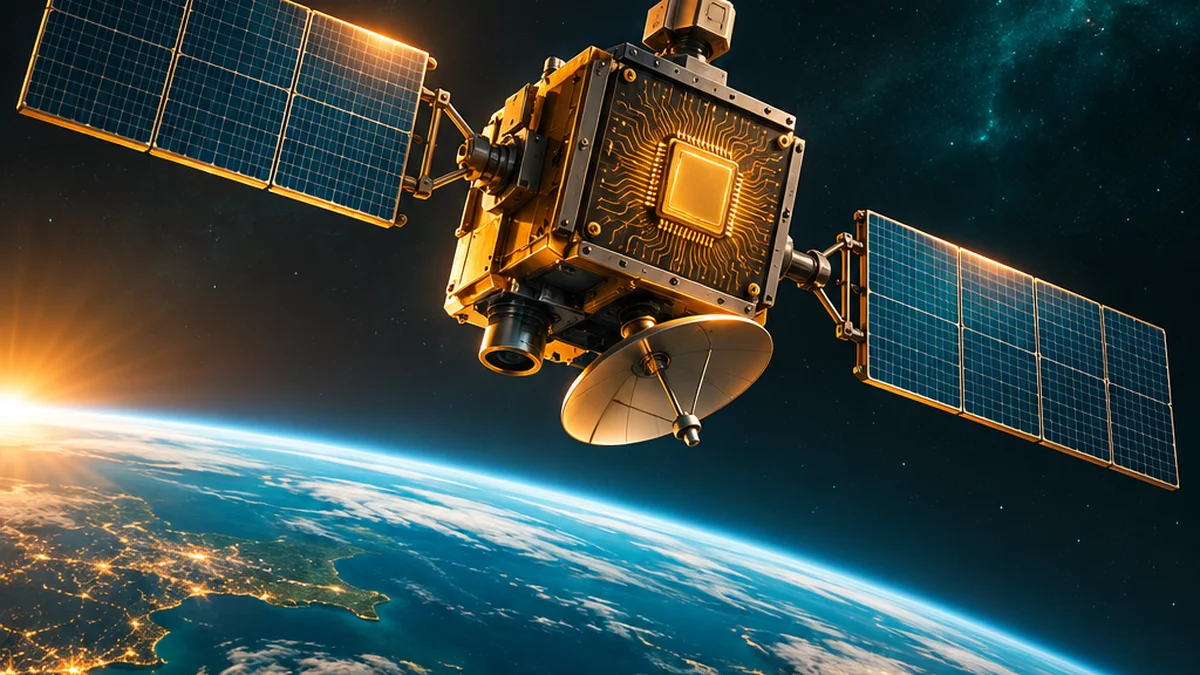
On 30 October 2026, Google said its Project Suncatcher prototype had returned an AI-generated response from a data-centre-class TPU in orbit. Google says the prototype launched on 1 October, and the team ran an onboard Gemma 4 model during the test.
How this fits the original plan
Google introduced Suncatcher on 4 November 2025 as research into solar-powered satellites carrying TPUs and communicating through optical links. Its October 2026 update identifies thermal and radiation testing as further work, with twin interconnected satellites targeted for 2027.
Google Research — prototype response, 30 October 2026 Google — original Suncatcher announcement, 4 November 2025
What it means for learners
A TPU is a processor designed to accelerate machine-learning work. The interesting engineering question is whether useful computing can operate reliably within orbital power, communication and maintenance limits. Our interpretation: a successful prompt response is an early systems test, while a useful commercial computing service needs repeatable performance, networking and an operating model. Those are different milestones.
Picmkr practice exercise
Try a small, reviewable project
What you need The two Google announcements and a diagramming tool or sheet of paper. There is no public Suncatcher setup in these announcements.
Trace a request
Draw four boxes: ground station, satellite computer, model and returned result. Add arrows for the uploaded input and downloaded output.
Separate power from data
Draw the solar array supplying electricity to the processor. Draw the communications link separately. Sunshine provides power; it does not carry the user’s prompt.
List open engineering questions
Add heat rejection, radiation exposure, link availability, launch logistics and repairs as questions to investigate. Do not attach invented performance or cost figures.
Compare with a normal API
Draw a second request path to a terrestrial model API. Identify which parts of your application would be the same and which infrastructure assumptions would differ.
Sample brief
Explain the difference between an orbital AI prototype and a commercial cloud API. Use only these supplied announcements. Separate demonstrated results, future targets and unanswered questions.How to tell it worked
Your diagram should explain where power, computation and communication happen, without suggesting that Picmkr or readers can rent Suncatcher today.
The 2027 interconnected-satellite milestone is a target in Google’s update. This is research infrastructure, not an announced public hosting product.
Common question
Can I deploy an AI agent to Suncatcher now?
The cited announcements do not offer public deployment access. Practise agent workflows using an available terrestrial service instead.
Sources and further reading
Announcement dates are shown above. Vendor performance claims are attributed; Picmkr has not independently benchmarked these releases. Practical exercises are editorial suggestions.